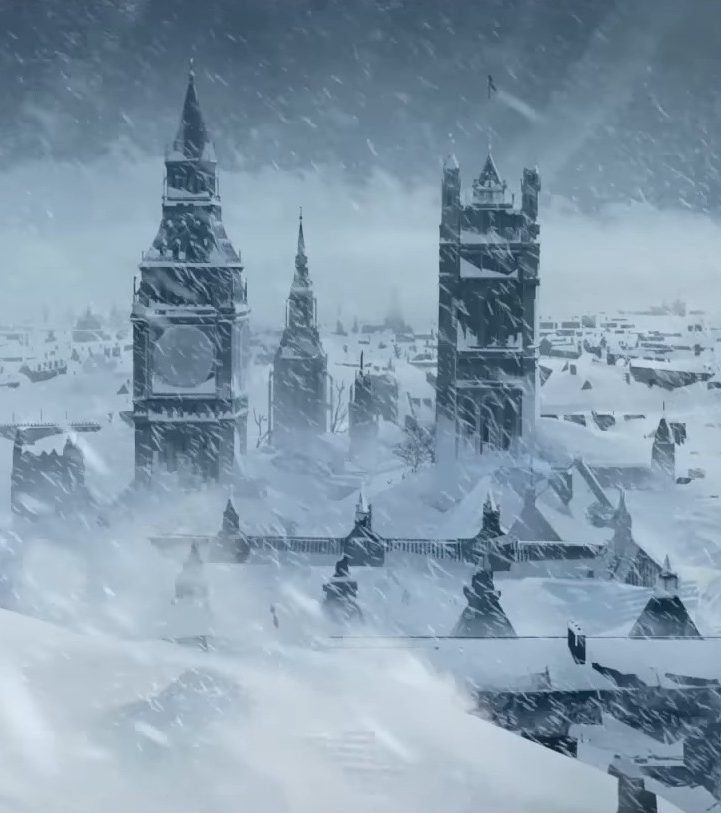
Setting Information
Unless otherwise mentioned here, one can assume that prior to the year 1886 the history of our world and the world of Frostpunk are broadly aligned, including historical events throughout the 1800s such as the First Boer War, the Crimean War, the establishment of the British Raj and the Scramble for Africa
Frostpunk takes place in an alternate 1886, during the height of the industrial revolution. When a series of massive volcanic eruptions occur in Indonesia, Earth finds itself plunged into a deadly global volcanic winter as a new ice age sets in. Crops fail, rivers freeze, animals migrate or die en masse. As society collapses the British Empire makes one last desperate gamble to preserve humanity’s future and orders the construction of enormous generators in Greenland near massive coal deposits that can dependably provide enough fuel to keep the generators operational for decades.
The Generator project is ultimately successful, though many site overseers find themselves resorting to extreme measures to ensure the project is completed within the near impossible deadline. Unfortunately, the collapse of an Empire is an expensive affair, and competing with strict resource budgets—and a workforce rapidly losing hope—most generators are either never completed, or are constructed with fatal design flaws that render the sites unusable. In total, less than a third of the generator sites are completed in time for the onset of the “Great Frost”.
In Brief
The Timeline
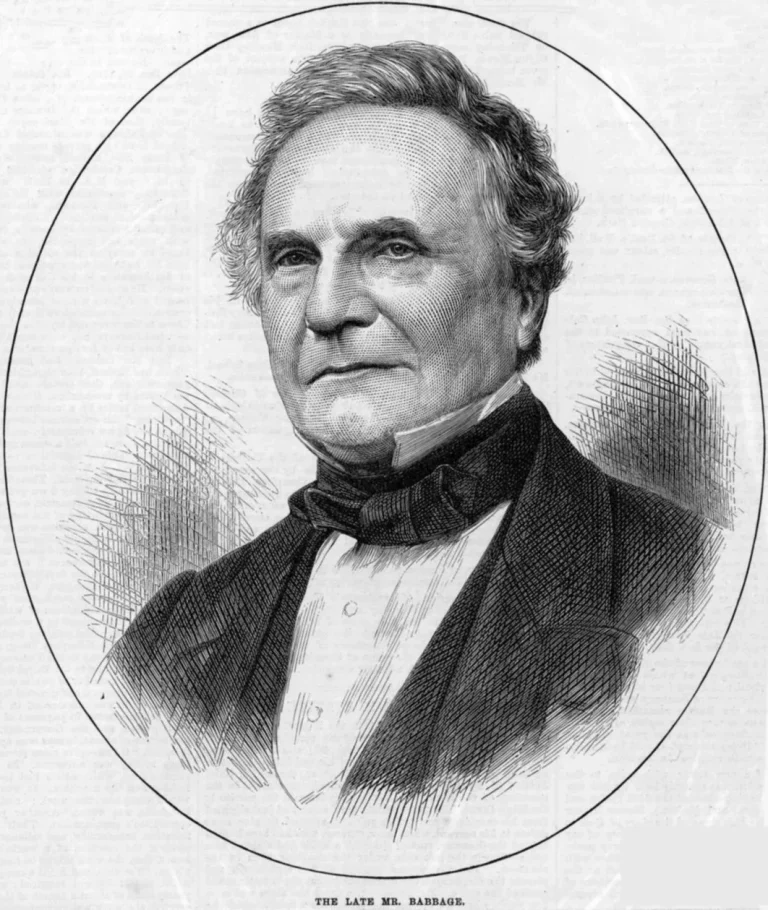
1822 - The Triumph of Charles Babbage
In 1822, Charles Babbage, a Mathematician, Philosopher, Inventor and Mechanical engineer conceived of one of his most famous inventions - the Difference Engine. The Difference Engine was a mechanical calculator designed to automatically compute and print mathematical tables, especially polynomial functions. In our world Babbage was never able to complete a fully functioning version during his lifetime due to funding and engineering challenges. In the world of Frostpunk however, Babbage was able to overcome these challenges and kickstart the development of advanced steam-powered technology, including automatons. Babbage's success with the Difference Engine resulted in increased funding from the British government. Along with the help of his friend, correspondent, and fellow mathematician, Ada Lovelace, Babbage was able to build the Analytical Engine, the successor to Difference Engine. A mechanical "general purpose computer" and the world's first computer in the world of Frostpunk.
Over the decades, Charles Babbage’s Analytical Engine continued to be improved and made smaller with each generation by other scientists and engineers, until a new type of Computational Engine was invented, capable of following orders and performing complex tasks.
1859 - Inventing the Steam Core
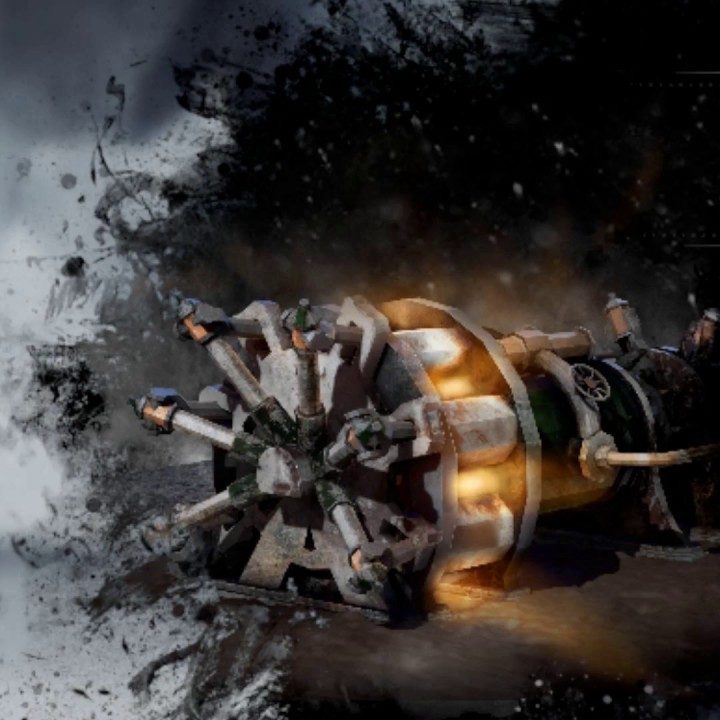
In 1859, the Steam Core was invented by Professor Hawkins. The Steam Core is somewhat similar to a rudimentary steam powered CPU, using steam bursts instead of electrical currents to simulate binary. The invention of Steam Cores became a massive boon for the British Empire and the technology was adopted by other countries, such as the United States.
However, all knowledge regarding the manufacture of Steam Cores was lost during the Great Frost and in the ensuing chaos of civilisations' collapse. Most tragically was the loss of Professor Hawkins, who attempted to escape the fall of London by crossing the Channel with his belongings, including all the blueprints and other documentation about Steam Cores, onboard an experimental Steam Core powered aeroplane. Only a model of the Steam Core prototype inside a waterproof chest was found afloat by a corvette searching for Professor Hawkins.
The few intact Steam Cores available to the residents of the Last Cities must be salvaged from buildings or derelicts dotting the Frostlands.
1860 - Birth of the Automatons
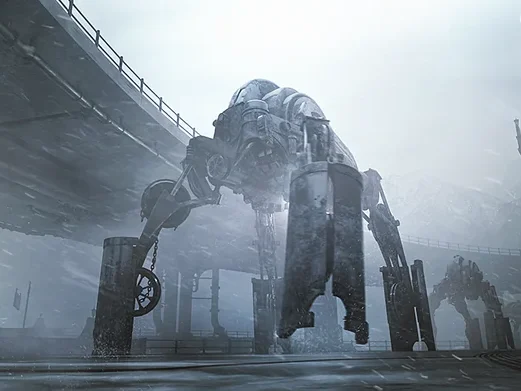
Concurrent with the invention of Steam Cores, and doubtless building upon the success of Babbage's project, the giant steam-powered robots known as Automatons were invented. These metal behemoths were born through the combination of complex clockwork mechanisms, the advanced computational engine, and the application of the Steam Core device. These huge machines, towering over people and structures, were the pinnacle of human engineering before the Great Frost and a massive boon to the British economy which propelled it to become the world’s first Superpower in the modern sense. Many other countries tried to make their own Automatons independently and even attempted to reverse-engineer them with mixed results, while others simply bought Automatons from the British.
1886 - The Arrival of the Great Frost
In the summer of 1886 the Great Frost began. Initially it presented as a chain of strange weather patterns, frost during summer, killer snowstorms in the northern countries, never-ending rain storms in the Sahara and an ever increasing drop in temperatures worldwide. The United Kingdom and several other countries sent out expeditions to the North to conduct research into the origin of the incipient changes in climate. Many of these British research outposts were equipped with Heat Generator Towers to enable prolonged study of these phenomena.
Meanwhile in Britain and in the rest of Europe, the general atmosphere continued to deteriorate. As even the hardiest crops began to fail, starvation had set in among the public. As days became months, millions of desperate people fled south in search of warmer weather and sources of food. They were met with chaos, famine, and death. Many southern countries had neither the infrastructure, the resources, nor even the inclination to handle a massive influx of refugees. Many governments tried to calm their people or turn a blind eye to this problem until it was too great to ignore. Anarchy erupted as man turned against man in a struggle over the few remaining resources, civilisation slowly crumbling under the growing weight of snow and ice.
In an attempt to save the Empire and its people, the British Government countenanced two solutions. The first involved sending multiple naval vessels with refugees to their colonial holdings in South America, East and South Africa, India, and Australia where it was warmer. The other plan would involve sending icebreakers and purpose-built Caterpillar-like Land Dreadnoughts with refugees to the farthest reaches of the coal-rich North, where members of the British Science Expeditions had finished the construction of heat-producing Generators, and where a chosen few could survive the environmental catastrophe and the consequent socioeconomic collapse.
However, the strategy of the British Government was thwarted by Mother Nature herself. An ice storm of apocalyptic proportions came from the south, devouring all in its path, and severing all communication and travel between Britain and rest of its Empire. Robbed of options, the British Government began putting into motion the complete evacuation of London and rest of the country.
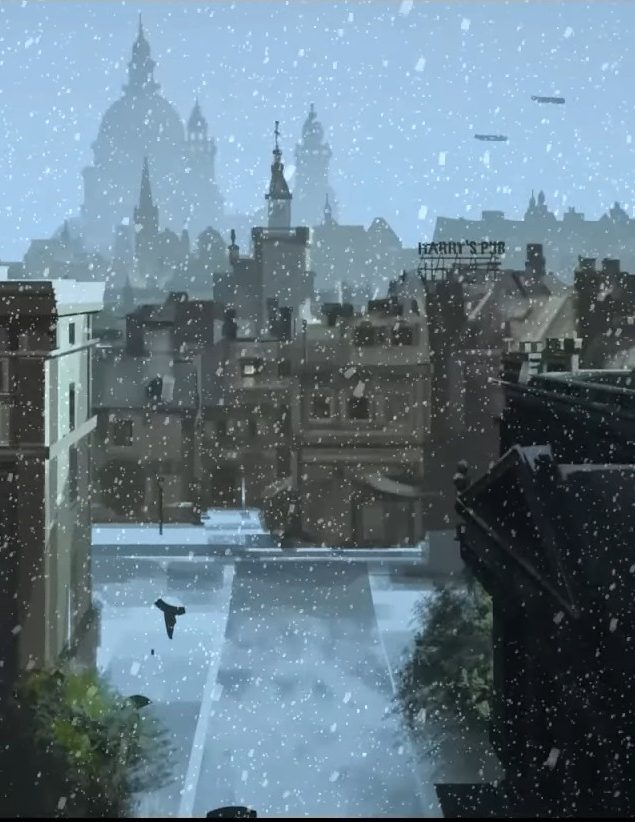
1886 - The Last Autumn
With the ever-lasting cold bringing about famine, starvation and bread riots all throughout Britain and with its colonial empire having been destroyed by an apocalyptic ice storm, the British Government, robbed of any other options, began mobilizing all available resources to carry out a complete evacuation of the British Isles, with the intent of evacuating as many people as possible to the coal-rich north to salvage what still could be saved of the British Empire. Ships were built or seized in order to transport both workers and resources to the far north. The Imperial Exploration Company (IEC) was tasked with the goal of navigating to the sites of the British Science Expeditions' research outposts, constructing additional Heat Generator Towers, and thus creating safe havens for the people of Britain to survive through the approaching cold and eventually re-establish both the Empire and civilisation. All of the generator sites that would come to exist would be products of this evacuation protocol.
The British Empire was not the only great power seeking refuge in the far north, however. The French Third Republic were also sending explorers, workers and resources to the north with seemingly similar intentions of building safe havens for their people.
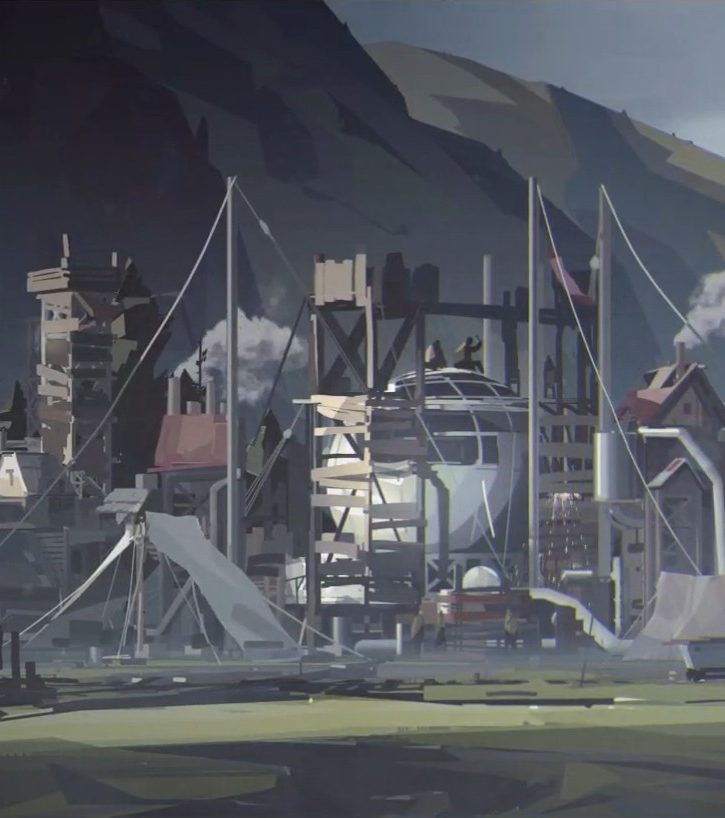
1886 - An End to the Old World
Once the Great Frost arrived in force and consumed the northern hemisphere, civilisation collapsed. It is not known exactly what happened but the results speak for themselves. Just as the Great Frost began to approach Britain, the British Government, financially exhausted and teetering on the brink of bankruptcy, ordered the complete evacuation of the British Isles. Boats, ships, land dreadnoughts any other viable forms of transportation were mobilized (and seized) and outfitted to transport citizens to the generator sites, with a seeming priority on the wealthy upper class.
This would ultimately turn out to be the last act of the British Empire. By the end of 1886 the United Kingdom and her dominions had been reduced to little more than scattered groups of survivors and refugees, desperately trying to make their way north to the generator sites. Many died in the harsh, icy and cold conditions while others became lost or trapped out in the Frostlands. However, some groups of survivors succeeded in reaching the safety of Generator sites and began gathering resources to found cities to enable their own survival and to locate and save those that became trapped in the Frostlands.